ULCER SUPPORT – Every equine practitioner appreciates the delicate nature of the equine gut. Problems related to the small intestine and large intestines are well understood and routinely treated. What may be surprising to many is how often the stomach is affected. Specifically, the incidence of gastric ulcers is extremely high, particularly in performance horses. This article will review why horses suffer from gastric ulcers and provide guidelines for their treatment and prevention. Many studies since the mid 1980’s have documented that gastric ulcers are commonplace in racehorses. An early post-mortem study in Hong Kong (Hammond et al, 1986) of 195 thoroughbred racehorses showed that 80% of the horses in active training had ulcers. The incidence of ulcers in horses retired from racing for one month or longer was 52%. Murray et al (1989) examined the stomachs of 187 horses ranging in age from one to 24 years. Eighty-seven horses had clinical problems including chronic, recurrent colic, poor body condition or chronic diarrhoea. One hundred horses had no clinical signs of gastrointestinal problems. Ninety-two percent of the horses with clinical problems had gastric ulcers. Surprisingly, 52% of the horses displaying no clinical signs also had lesions. Racehorses in training had a higher incidence of ulcers (89%) than non-racers (59%). More recently, two studies evaluated the incidence of gastric ulcers in California racehorses. In one post-mortem study (Johnson et al, 1994) of 169 horses in training, 88% of Thoroughbred horses in training had ulcers. A gastro endoscopic study of 202 Thoroughbred horses in training showed that 81% had ulcers (Vatistas et al, 1994). Each of these studies produced remarkably similar results, 80-90% of racehorses in training have gastric ulcers. The vast majority of these lesions occur in the region of the stomach above the Margo Plicatus, with very few lesions in the glandular portion.
FREQUENT QUESTIONS
How common is the gastric ulcer?
Gastric ulceration is a widespread condition in horses and foals. EGUS affects up to 93% of racehorses and almost 60% of other performance horses such as show horses. In foals, the overall prevalence of gastric lesions is up to 57%.
What are the signs of gastric ulceration?
There are many clinical signs and symptoms that are associated with EGUS; however, it is important to note that many horses with stomach ulcers do not exhibit any obvious signs. Because the prevalence of stomach ulcers in horses has only been recently understood, ulcer symptoms can go unrecognised by trainers, owners and veterinarians. In adult horses, common signs include poor performance, colic and poor appetite. Other signs associated with ulcers include attitude changes, poor body condition, a tucked-up appearance and a poor coat. In foals, clinical signs include intermittent diarrhoea, intermittent colic, rough hair coat, poor growth and a pendulous abdomen. Also seen is teeth grinding, laying on the back, salivation and frequently interrupted nursing. Of symptomatic horses, 92% were found to have gastric ulcers upon endoscopic examination.
Why are performance horses more susceptible to stomach ulcers that non-performance horses?
Like human ulcers, stomach acid appears to be the main cause of equine ulcers. Excess acid can “eat” through the protective lining and damage the stomach. The high prevalence of ulcers seen in performance horses results from many factors including the way the horses are fed and managed. Intensity of training also may contribute to ulcer formation but the exact cause remains undetermined. Helicobacter pylori, bacteria that are a factor in the development of human ulcers, have not been isolated from horse stomachs and are currently not considered to be a cause of ulcers in horses. In addition, grains and pelleted concentrates can increase the production of gastrin, a hormone that stimulates acid production. Therefore, horses that are fed high grain diets are more likely to have higher gastric acidity than horses offered free choice forage without grain.
What are the causes of gastric ulceration in all horses?
Causes of gastric ulcers in horses include feeding management practices, physical stress, diet and specific medications given in high doses. Any horse with serious illness is also at risk of developing ulcers; intensity of training also may contribute to the high prevalence of stomach ulcers in horses.
What are the clinical manifestations of gastric ulcers in horses?
Clinical signs of gastric ulceration in adult horses can include a combination of colic, poor appetite, decreased performance, dullness, attitude changes, poor body condition, rough hair coat and weight loss. Foals tend to exhibit signs including intermittent nursing, lying on the back, poor appetite, intermittent colic, poor body condition, diarrhoea, teeth grinding and salivation.
How do ulcers in horses compare to human ulcers?
Similar to ulcers in humans, ulcers in horses may develop from increased production of gastric acid and decreased resistance of the lining of the stomach to gastric acid. However, a bacteria, Helicobacter pylori, which is a factor in human ulcers, has not been found as yet in horse stomachs. Therefore, at this point, it is not considered to be a cause of ulcers in horses.
How do ulcers form?
The equine stomach secretes acid continuously. Lesions in the upper portion of the equine stomach (the squamous mucosa lining) result in primarily from excess acidity, whereas lesions that affect the bottom of the stomach (the gastric glandular mucosa lining) result primarily from defective mucosal protection. Like human ulcers, stomach acid appears to be the main cause of equine ulcers. Excess acid can eat through the protective lining and damage the stomach. The high prevalence of ulcers seen in performance horses results from many factors including the way the horses are fed and managed. Intensity of training also may contribute to ulcer formation, but the exact reason why remains undetermined. Helicobacter pylori, bacteria that are a factor in the development of human ulcers, have not been isolated from horse stomachs and are currently not considered to be a cause of horse ulcers.
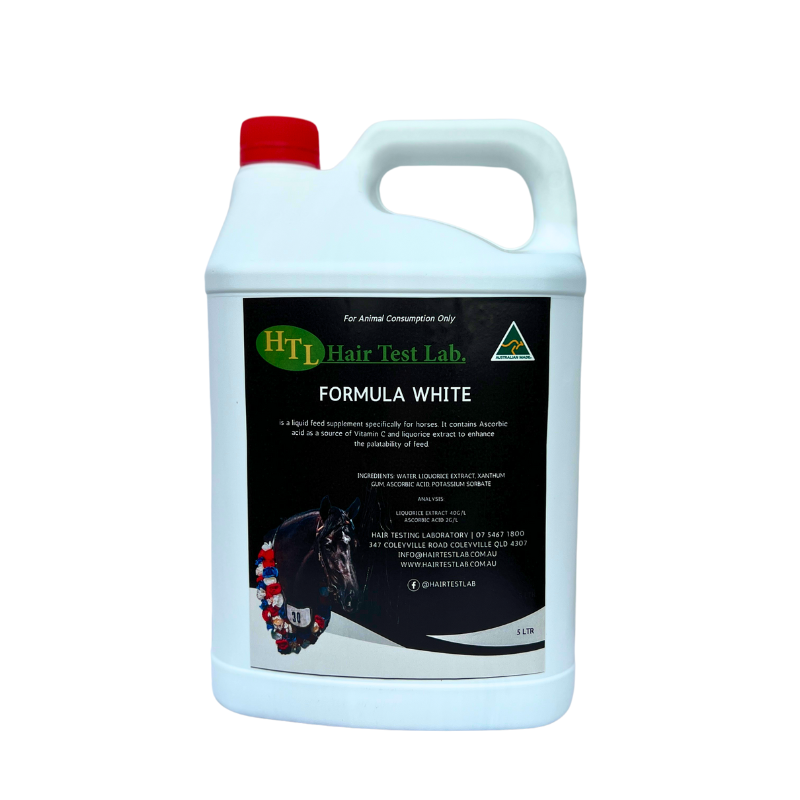
Available in 500ml & 5L bottles.
INFORMATION FOR EDUCATIONAL PURPOSES ONLY